To deep clean LVP, vacuum with the beater bar off, then mop in small sections with a pH-neutral cleaner and a well-wrung microfiber pad, rinsing the pad often so you lift dirt instead of spreading it around. Skip steam, vinegar, wax, and abrasive pads. Those damage the wear layer.
Nobody looks up how to deep clean LVP until the floor stops responding to a mop. Luxury vinyl plank sells itself as the floor you never worry about: waterproof, scratch-resistant, kid-proof, pet-proof. Then two years in, it looks gray in the traffic lanes and cloudy near the kitchen, and mopping does nothing. Richard Johnson has walked into that exact situation in plenty of North Central Florida homes over 30+ years of floor work, and the homeowner is usually convinced they've ruined the finish.
Most of the time they haven't. The floor is dirty in a way a mop can't fix, and fixing it is mostly a matter of what you leave out.
Why Does LVP Still Look Dull After Mopping?
Look closely at a plank under a lamp. That wood-grain texture isn't printed flat; it's embossed into the wear layer as actual peaks and valleys. It's what makes the floor read as wood instead of plastic.
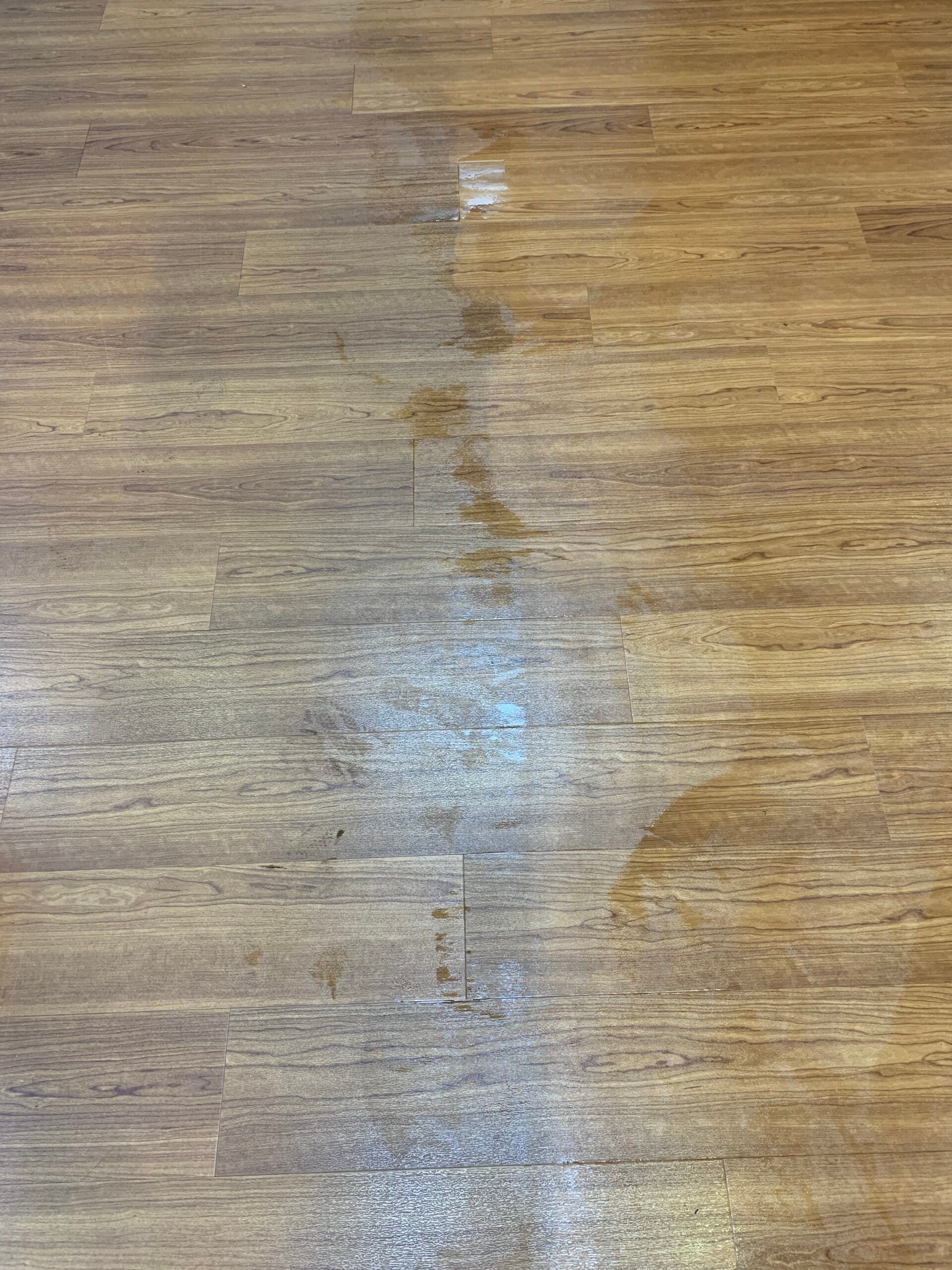
Those valleys hold soil. A flat mop rides across the high points and never reaches down into the grain, so every pass moves dirty water around and leaves a thin film behind when it dries. Do that weekly for a couple of years and the film builds into the haze people mistake for a worn-out finish.
That's why the floor looks worse right after you mop it, and better once the light changes. You're looking at residue sitting in the texture, not damage to the plank.
What Should You Not Use on LVP Floors?
The manufacturers are strict here, and for good reason. Warranty language on most luxury vinyl planks rules out several things homeowners reach for first.
- Steam mops. COREtec tells owners to refrain from using a steam mop unless the method is specifically approved in that product's cleaning guidelines. Heat and forced moisture work into the seams, and they can soften the adhesive under glue-down planks.
- Vinegar. It's mildly acidic, and the same manufacturer guidance calls it out as capable of harming the floor. It also leaves its own dulling residue.
- Wax, polish, and "restorer" products. These coat the plank rather than clean it. Once a polish goes down and starts wearing unevenly, getting it back off is a much bigger job than the original problem.
- Oil soaps and anything with detergent left in it. Residue is the enemy of LVP. If it doesn't rinse clean, it becomes tomorrow's haze.
- Abrasive pads, powders, and scouring cream. The wear layer is the only thing protecting the printed design underneath. Scratch through it and no cleaning brings it back.
- Vacuum beater bars. A rotating brush roll on hard flooring flings grit across the surface and scratches it. Switch to hard-floor mode or use the bare-floor attachment.
Bleach and ammonia belong on that list too. Neither is worth the risk on a floor that responds perfectly well to a pH-neutral cleaner.
Already used one of these and think the floor is ruined? It usually isn't. Send Elite a photo before you start pricing replacement planks.
How Do You Deep-Clean LVP Step by Step?
A real deep clean is slower than a weekly mop, and the order matters more than the product.
- Dry-remove everything first. Vacuum the whole floor with the beater bar off, then get the edges, corners, and under-furniture spots where grit collects. Any sand left down here turns into an abrasive the moment you add water.
- Mix a pH-neutral cleaner at label strength. Stronger is not better. Over-concentrated solution is one of the most common causes of the film people are trying to remove.
- Work in small sections. Four or five planks wide is plenty. LVP should never sit wet, so cleaning a small area and finishing it beats flooding the room.
- Let the solution sit for a minute. Dwell time does the work that scrubbing would otherwise have to. It softens what's packed into the grain.
- Agitate along the grain. A soft-bristle brush or a microfiber pad worked in the direction of the embossing reaches into the valleys. Circles skate over them.
- Rinse the pad constantly. Two buckets, one clean and one for wringing out. A pad that's already loaded with soil just redistributes it, which is how the original haze got there.
- Wipe dry. Go over the section with a clean, dry microfiber cloth. Standing water finds seams, and dried-on solution is residue.
Work backward toward a doorway so nobody walks the floor while it's damp.
How Do You Get Ingrained Dirt Out of Vinyl Flooring?
When you deep clean vinyl floors and a few spots survive the whole process, go smaller and more patient rather than harsher.
Isopropyl alcohol on a cloth handles most sticky residue, scuffs, and marker without touching the wear layer. A melamine sponge works on rubber heel marks, used lightly and only on the mark itself, since it's a mild abrasive. Grease near a stove usually needs a degreasing pass with the pH-neutral cleaner and a longer dwell, repeated twice, before it lets go.
What won't help is pressure. Scrubbing hard on a stubborn spot is how homeowners put a dull patch in an otherwise fine floor.
How Often Should LVP Be Deep-Cleaned?
Good LVP floor care runs on a simple rhythm: sweep or vacuum a few times a week, damp-mop weekly, and give the floor a full deep clean once or twice a year. Homes with dogs, kids, or a door that opens straight onto sand run at the higher end of that. Florida sand is unusually good at hitching a ride indoors and unusually hard on wear layers.
Entry mats at every exterior door cut down the deep-clean workload more than any product on the shelf.
When Is It Worth Calling a Pro?
Elite's whole approach is to restore before replacing, and LVP is one of the easier floors to bring back. If a floor has years of built-up film, or a previous owner put polish down, or the haze survived a careful deep clean, that's the point where professional equipment earns its keep.
The job needs agitation that reaches into the embossed grain and a way to pull the loosened soil off the floor before it dries back down, all without the high heat that vinyl can't take. That combination is hard to reproduce with a bucket. Elite handles LVP floor cleaning across Live Oak, Lake City, Gainesville, and the surrounding area, and it's the same restoration thinking behind the tile and grout work: sound flooring rarely needs replacing, it needs the soil taken out of it.
Not sure which side of that line your floor falls on? Send a photo of the worst section or call 386-678-5178. Richard will tell you straight whether a deep clean will get the result you want.
Frequently Asked Questions
What is the best cleaner for luxury vinyl plank floors?
A pH-neutral floor cleaner diluted to label strength is the safest choice for luxury vinyl plank cleaning. Neutral pH cleans without leaving the residue that acidic or alkaline products leave behind, and residue is what makes LVP look dull. Check your manufacturer's care guide first, since some brands name an approved cleaner and using something else can affect the warranty.
Can you use a steam mop on LVP flooring?
No, unless your specific manufacturer approves it in writing. Steam forces heat and moisture into the seams and can soften adhesive under glue-down installations. Manufacturer care guides commonly direct owners away from steam, and using it anyway can affect warranty coverage, so check yours before you plug one in.
Can I use Dawn to clean luxury vinyl plank flooring?
It's not a good choice. Dish soap is formulated to cling and produce suds, so it leaves a film on flooring that attracts dirt faster than before. If it's already been used, rinse the floor two or three times with clean water and a fresh pad, then switch to a pH-neutral cleaner.
Can you use Swiffer wet wipes on vinyl plank flooring?
They're fine for a quick wipe of a small spill and they won't hurt the floor. They don't deep clean, though. The pad is flat and it never reaches into the embossed grain where the soil actually sits, so a floor maintained only with wet wipes still hazes over time.
Does vinegar damage LVP?
It can. Vinegar is acidic, and manufacturer guidance specifically warns against it for luxury vinyl. It also dries with a residue of its own. A neutral cleaner does the same job with none of the risk.
0 Comments