
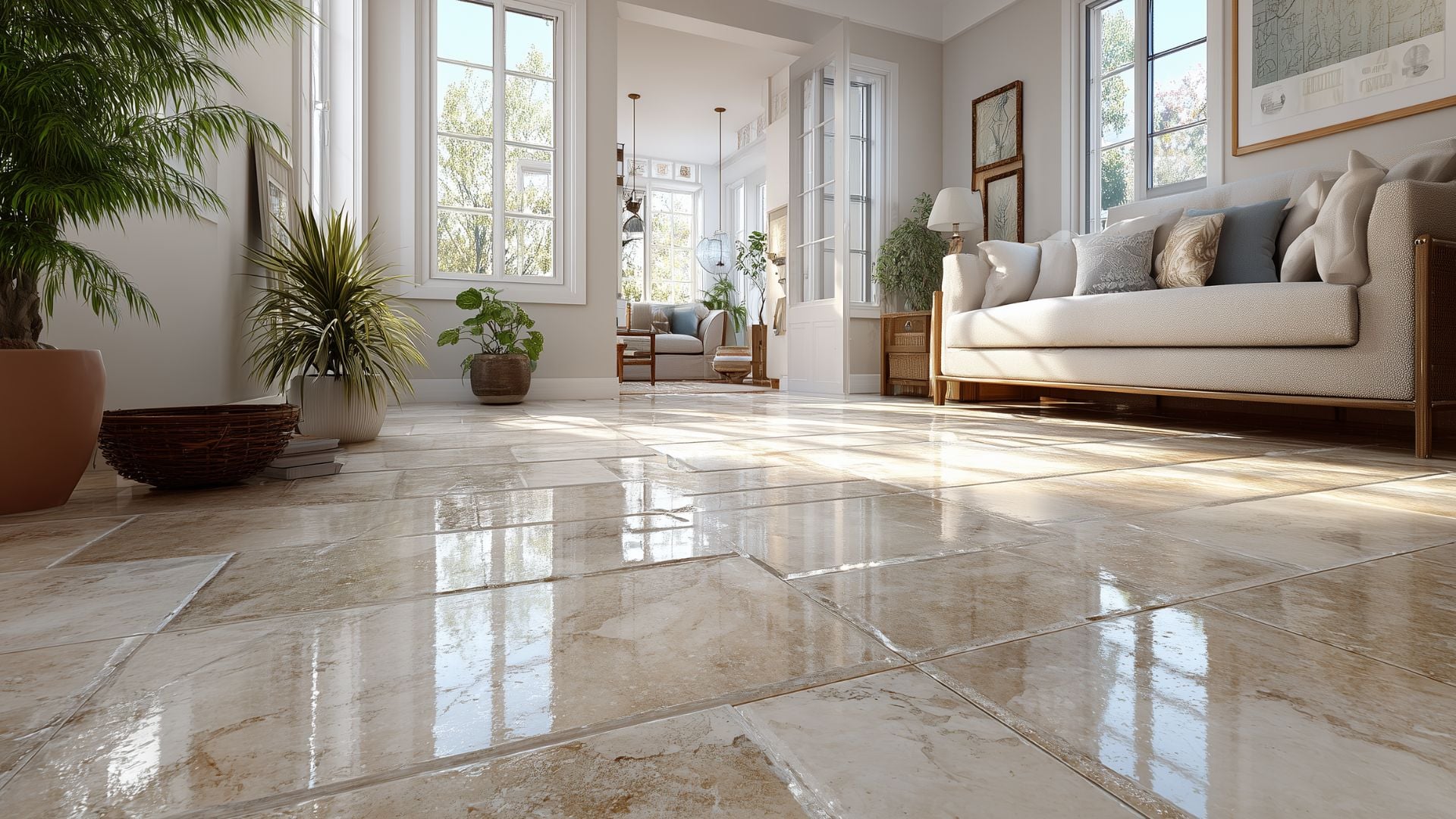
Grout is the part of a floor that gives a room away. The tile can look fine while the lines between it turn gray, then brown, then a color you stop trying to name. In North Central Florida the problem moves faster, because our humidity feeds mildew down in those lines all year long. Mopping does not fix it, because the dirt is not on top of the grout. It is down inside it.
So homeowners reach for a steam machine and ask the fair question: is steam cleaning actually safe for tile and grout, and will it hold up in a Florida home? The short answer is yes for most floors, with a few real exceptions worth knowing before you start. This guide walks through how grout gets dirty, how the professional steam process works, how steam compares to chemical-only cleaning, what you should not steam clean, and how often a floor really needs a deep clean.
Why Grout Gets Dirty in the First Place
Grout is mostly cement and sand. Under a microscope it looks like a sponge, full of tiny pores. Tile, by contrast, is dense and sealed at the factory, so dirt wipes right off it.
Those pores trap a few things on repeat:
- Cooking grease and food spills in kitchens
- Soap scum, hard-water minerals, and body oils in showers
- Ground-in grit from shoes in entryways and hallways
- Moisture, which feeds mold and mildew in the lines (a year-round issue in our Florida climate)
Because the grime sinks below the surface, cleaning has to lift it back out. You cannot wipe out what a mop cannot reach. That is why a floor can be "clean" and still look dingy.
How the Professional Steam Cleaning Process Works
Professional tile and grout cleaning is not a fancy mopping. It is a closed extraction process, and the steps matter. Here is how Elite runs a job, start to finish.
- Inspect and identify the surface. Owner Richard Johnson checks what he is working with first. Ceramic, porcelain, natural stone, sanded grout, or epoxy grout all behave differently under heat and pressure. The method gets matched to the material before anything turns on.
- Dry soil removal. Loose grit gets swept or vacuumed off. Skipping this just turns dust into mud and grinds it deeper.
- Pre-treatment. A cleaning solution is worked into the grout lines and given time to break down grease, soap film, and organic buildup. Dwell time does most of the quiet work here.
- Hot-water extraction. This is the core of it. A truck-powered system pushes high-temperature water and vapor into the grout at pressure, then vacuums the loosened soil and dirty water straight back out in the same pass. The grime leaves the home. It does not get pushed around.
- Detail work on the stubborn spots. Older stains and high-traffic lines get a second pass with a nylon detail brush, never a stiff wire brush that can chew up the grout.
- Sealing (when it makes sense). A penetrating sealer goes on after the grout dries, putting a protective barrier in those open pores so the next round of dirt sits on top instead of soaking in.
The vacuum recovery is what separates a professional clean from a steam mop. A mop sanitizes the surface and leaves the dirty water on the floor to dry. Extraction pulls it out of the building entirely. That is the difference between a floor that looks better for a week and one that stays clean for months.
Steam vs. Chemical: How the Two Methods Compare
The honest answer is that the best jobs use both, in the right order. Here is how the two approaches compare.
| Factor | Steam (hot-water extraction) | Chemical-only cleaning |
|---|---|---|
| How it works | Heat and pressure loosen and flush dirt out of the pores | Cleaning agents dissolve grime, then it gets wiped or rinsed |
| Chemical exposure | Minimal; heat does the heavy lifting | Higher, depending on the product strength |
| Deep-set stains | Strong, especially with pre-treatment | Strong on grease and organic stains; can lighten colored grout |
| Surface safety | Safe for most sealed tile; risky on some delicate stone | Acidic cleaners can erode cement grout and etch stone |
| Dirty water | Vacuumed out of the home | Often left to dry on the surface |
Steam shines because the heat lifts embedded grime and kills mold and bacteria without leaning on harsh chemicals. A professional pre-treatment handles the part steam alone can struggle with, like baked-on grease or set-in organic stains, and then the steam flushes it all out.
Chemical-only cleaning has a real trade-off. Acidic grout cleaners cut through soap scum and mineral buildup fast, but cement grout is mineral too, so the acid slowly eats the lines and can dull natural stone like marble or travertine. Used wrong, a chemical that promises a quick fix shortens the life of the floor.
Elite's approach pairs a targeted pre-treatment with hot-water extraction. The chemistry does the breaking down, the steam and vacuum do the removing, and the floor is not soaked in anything corrosive. Clean for health, not just looks. You can see the full process on the tile and grout cleaning service page.
What You Should Not Steam Clean
Steam is gentle on most floors, but it is not for everything. A few surfaces need a softer hand.
- Unsealed or delicate natural stone. Marble, travertine, and some limestone can be heat-sensitive or porous enough that aggressive steam does more harm than good. These often call for a dedicated stone cleaning and polishing approach instead, using a certified process built for the material.
- Cracked or crumbling grout. Forcing pressure into failing grout can break it apart further. That grout needs repair first.
- Some epoxy grout. Epoxy can be temperature-sensitive, so a gentler method is sometimes the smarter call.
This is exactly why the first step is identifying the surface. The right method on the wrong floor is still the wrong method.
What Results to Expect (and How Long They Last)
A good deep clean restores grout close to its original color, not bleached white but back to the shade it was meant to be. Steam also strips out the mold, mildew, and bacteria that make a bathroom smell musty no matter how often it gets wiped. In a humid Florida home, that musty smell going away is often the part homeowners notice first.
It is worth being straight about limits. Grout that has been stained for years, or that was never sealed, may not come back 100 percent. Deeply set discoloration sometimes needs more than one pass, and grout that is physically failing needs repair, not just cleaning. The goal Elite works toward is restoring what you have instead of replacing it, and most floors have far more life left in them than people expect.
Sealing is what makes the results last. Once the grout is clean and dry, a penetrating sealer fills those open pores so the next year of spills sits on the surface where it can be wiped away. Sealer does wear down over time, which is why resealing keeps a floor protected.
How Often Should You Deep-Clean Tile and Grout in Florida?
For most homes, a professional deep clean every 12 to 18 months keeps grout from reaching the point of no return. Our humid climate pushes many North Central Florida households toward the shorter end of that window, because moisture keeps mildew working in the grout year-round. The right interval depends on the room and the household.
- Kitchens and entryways: lean toward the shorter end. Grease and tracked-in grit build up fast in these zones.
- Bathrooms: moisture means mold, so showers and bathroom floors benefit from regular professional attention.
- Busy homes with kids, pets, or heavy traffic: plan on more frequent cleaning than a quiet household.
Between professional visits, simple habits stretch the results. Sweep regularly so grit does not grind into the lines, wipe spills before they soak in, and skip the harsh acidic cleaners that wear grout down.
Frequently Asked Questions
Is steam cleaning safe for tile and grout?
Yes, for most sealed tile and standard cement grout, steam cleaning is both safe and highly effective. The heat lifts dirt out of the pores and kills bacteria and mold without harsh chemicals. The exceptions are delicate natural stone, some epoxy grout, and grout that is already cracked or failing, which is why a professional checks the surface before starting.
Do I need to reseal grout after steam cleaning?
Often, yes. Steam cleaning and the pre-treatment can wear down old sealer, and clean, open grout pores are the ideal moment to apply a fresh penetrating sealer. Resealing puts the protective barrier back so dirt sits on the surface instead of soaking in. If your grout was never sealed to begin with, the post-clean dry-down is the best time to seal it for the first time.
What surfaces should not be steam cleaned?
Steam is too aggressive for unsealed or delicate natural stone like marble, travertine, and some limestone, which can be heat-sensitive or too porous. It is also a poor choice for grout that is cracked or crumbling, since forcing pressure into failing grout can break it apart further. Some epoxy grout is temperature-sensitive too. In those cases a gentler, material-specific method is the safer route, which is why surface identification is always the first step.
What do professionals use that a homeowner steam mop cannot match?
The big difference is truck-powered hot-water extraction. A professional system combines high heat, pressure, and vacuum recovery to flush dirt out of the grout and pull the dirty water out of the home in one pass. A consumer steam mop sanitizes the surface but leaves the loosened soil behind to dry right back into the lines. The pre-treatment chemistry and the surface knowledge that comes with 30 years of experience also matter. If you have been reaching for a pantry mix instead, here is what vinegar and baking soda really do to grout.
Restore Your Floors Before You Replace Them
Tile rarely needs replacing. The grout just needs to be cleaned the right way, with the right method for the surface. Elite Carpet, Tile & Grout Cleaning is owner-operated, certified, and has spent 30 years bringing floors across Live Oak, Lake City, Gainesville, Tallahassee, and North Central Florida back to like-new.
Want to know what your floors could look like? Learn more about Elite's tile and grout cleaning, or send a photo for a fast, no-pressure quote. Call or text 386-678-5178 to talk with a certified cleaning specialist.
0 Comments